Fall weddings start their receptions in daylight. Here’s the one thing that throws off, and how we plan around it before you ever have to think about it.
- Daylight
Dinner, toasts, the natural lull. The lighting rig can’t add anything yet, and it doesn’t need to. - The gap
Bright sky, flat energy, and roughly an hour before the room can actually turn. Where most nights get lost. - Full dark
Lights and music finally pulling in the same direction. This is where the dancing belongs.
Fall weddings look different on paper. Earlier start times, earlier sunsets, a reception that sometimes kicks off while there’s still light in the sky. Couples plan around the weather. They plan around jackets and blankets and where the heaters go. What almost nobody plans around is the light itself, and what it does to the room.
The real problem
A dance floor doesn’t build the same way in daylight.
Here’s what most people don’t know: a dance floor doesn’t build the same way in daylight as it does in the dark.
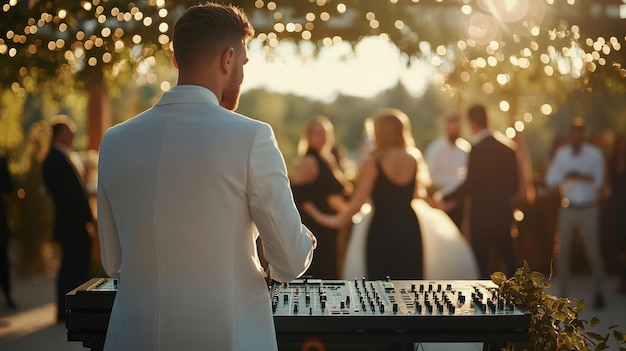
At a summer wedding, the sun’s down by the time dinner wraps. The lighting rig takes over, the energy has somewhere to go, and the DJ can read the room and escalate in a straight line. In fall, that same reception can start at 4:45 with the sun still up, guests still adjusting to the temperature, and forty-five minutes to an hour before it’s actually dark enough for the lighting and the energy to do their job.
That gap is real. It’s not a mood problem, it’s a mechanical one. Guests aren’t going to dance the same way under a bright sky that they will once the room goes dark and the lights take over. A DJ who doesn’t know that gap exists will either force energy too early, and lose it, or wait too long, and never get it back.
“You don’t need to know when your own reception hits its energy ceiling. We already do.”
GTE Event Group
The system
We build the night around your actual sunset.
This is one of the first things we map out when we take on a fall wedding. We pull your actual sunset time for your date and venue, not a general seasonal guess, and we build the night’s pacing around it. That means dinner, toasts, and any lulls get placed in the daylight window on purpose, when the energy in the room is naturally lower anyway. Then the dancing gets built for the window right as the light drops, when the lighting rig and the music can actually do their job together instead of fighting a sky that’s still bright.
It’s the difference between a DJ playing songs and a DJ running a night. One reacts. The other’s already three steps ahead of the sun.
- A DJ playing songs
Reacts to the room. Finds the gap the same time your guests do. - A DJ running a night
Already three steps ahead of the sun. The gap was planned for months ago.
You didn’t book a fall wedding to manage a lighting schedule.
That’s the whole point of what we do. The night still builds the way it’s supposed to. You just never had to know why.